
Insights ·
What a conceptual site model has to show in a soil and groundwater dispute
In a soil or groundwater dispute, the conceptual site model is the picture every later opinion has to agree with. It names where mass could have started, which geologic units can carry it, which way the water moves, and which wells actually test that story. If that picture is missing, a transport model and a chemistry plot are decorations.
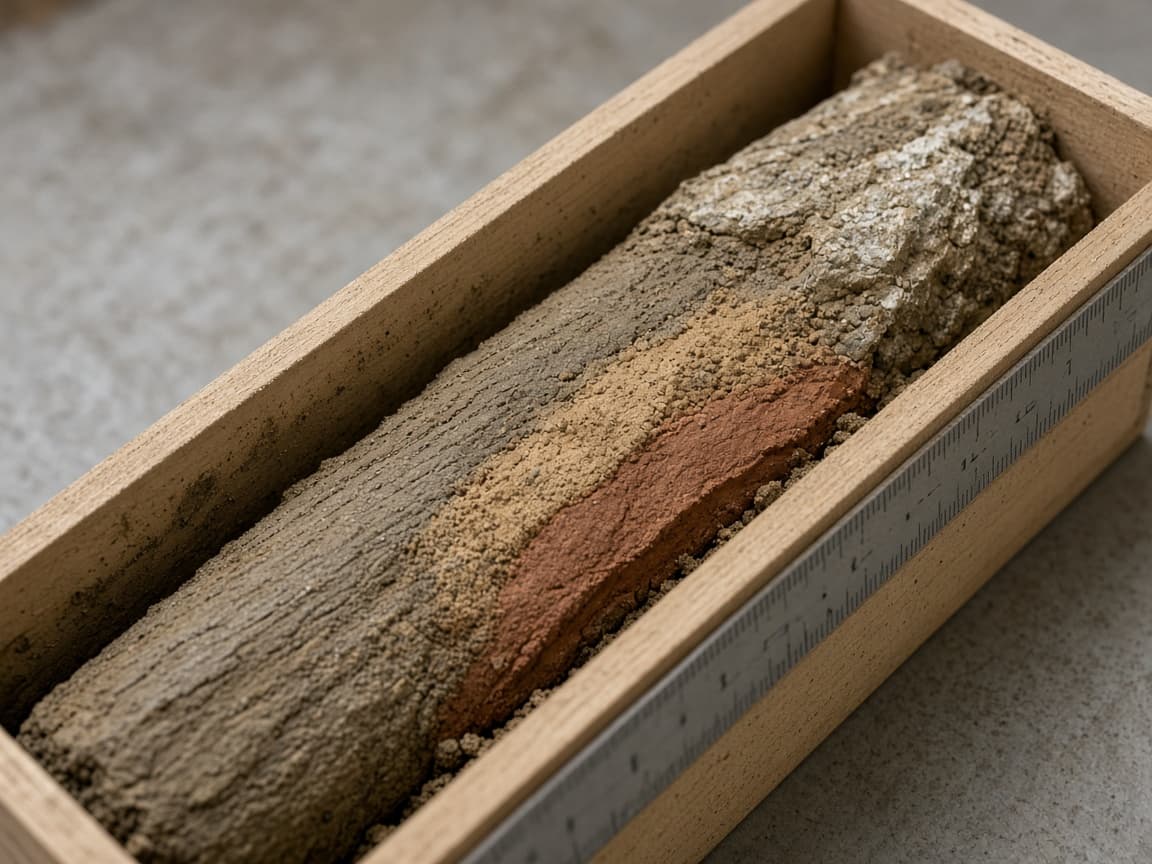
It is a hypothesis, not a figure title
A box labeled conceptual site model on a slide is not the model. The model is a set of statements a reviewer can reject: this unit is continuous, this well is upgradient, this fill is a pathway, this alternative source is still open. Each statement should point at the boring, the head measurement, or the historical record that supports it.
Counsel choosing an expert for a soil or groundwater dispute can ask for that picture before they ask for a conclusion. The qualifications that matter are the ones that match the picture: forensic geology when the framework is the fight, hydrogeology consulting when the heads and the well network are the fight, and chemistry when the sources have to be separated.
Geology, wells, and chemistry have to be one story
A cross-section that stops at the property line, a potentiometric map from a different year than the samples, and a chemistry figure with no screen intervals are three different sites. The conceptual model is the document that forces them onto one date, one unit, and one question. Water quality investigations belong inside that frame. A sampling plan written before the model usually samples the wrong interval.
Alternative explanations stay on the page until the data retire them. Background, a second release, a leaking utility, an upgradient property, and a well that mixes two units are ordinary, not hostile. Dropping them in a footnote is how a clean narrative becomes a cross-examination outline for the other side.
What usually breaks the model
The breaks are concrete. The screen is above the water-bearing zone the claim is about. The only “upgradient” well is beside the source. The cross-section connects two borings that do not show the same contact. The flow arrow is an average of heads measured years apart. None of these require a new computer model to notice. They require the logs and the construction diagrams in the same review.
When the conceptual model survives that pass, a fate and transport run can test timing. When it does not survive, the run will only reproduce the bad picture at higher resolution. The note on groundwater model admissibility starts from this point: a model is a structured argument, and the argument is the conceptual model.
Write the limits in the same section as the picture
A conceptual site model that cannot list what would change it is not ready for a report. One more boring through the contact, one dry-season round of heads, or one well that actually sits upgradient should be enough to say whether the picture holds. That is the scope of a first review, and it is a better use of the record than a treatise.
The home office is in Freedom, Beaver County, where layered industrial fill, mine-influenced groundwater, and long monitoring histories are common. Those settings are described on the Pittsburgh hydrogeology expert witness page. Statewide licensure is on the hydrogeology expert witness in Pennsylvania page. The conceptual-model test does not change with the county: name the unit, name the well, name the alternative that is still alive.
Questions counsel ask
- What is a conceptual site model in a groundwater case?
- A testable picture of sources, geologic units, groundwater flow, and the wells that sample them. It is the hypothesis the chemistry and any numerical model have to match, not a decorative diagram.
- Should the conceptual model be finished before modeling starts?
- Yes. A transport model built on an unstated conceptual model hides the assumption inside a conductivity zone. Fix the picture, then decide whether a model is even needed.
- Who should prepare it?
- The person who will sign the opinion. A conceptual site model assembled by one firm and opined on by another splits the responsibility for the picture the case will actually use.
Daniel S. Fisher, P.G.
Owner and principal hydrogeologist, Wetstone Solutions LLC. Pennsylvania professional geologist since 1994. This note is for education. It is not legal advice and not an opinion on any matter.
Related reading
- Forensic geology
- Hydrogeology consulting
- Water quality investigations
- Forensic geology in environmental litigation