
Insights ·
Forensic geology in environmental litigation
Forensic geology in an environmental case asks whether the subsurface framework can support the pathway someone is claiming. Stratigraphy, fill, structure, and preferential paths come first. Groundwater flow and chemistry are interpretations of that framework, not a substitute for it.
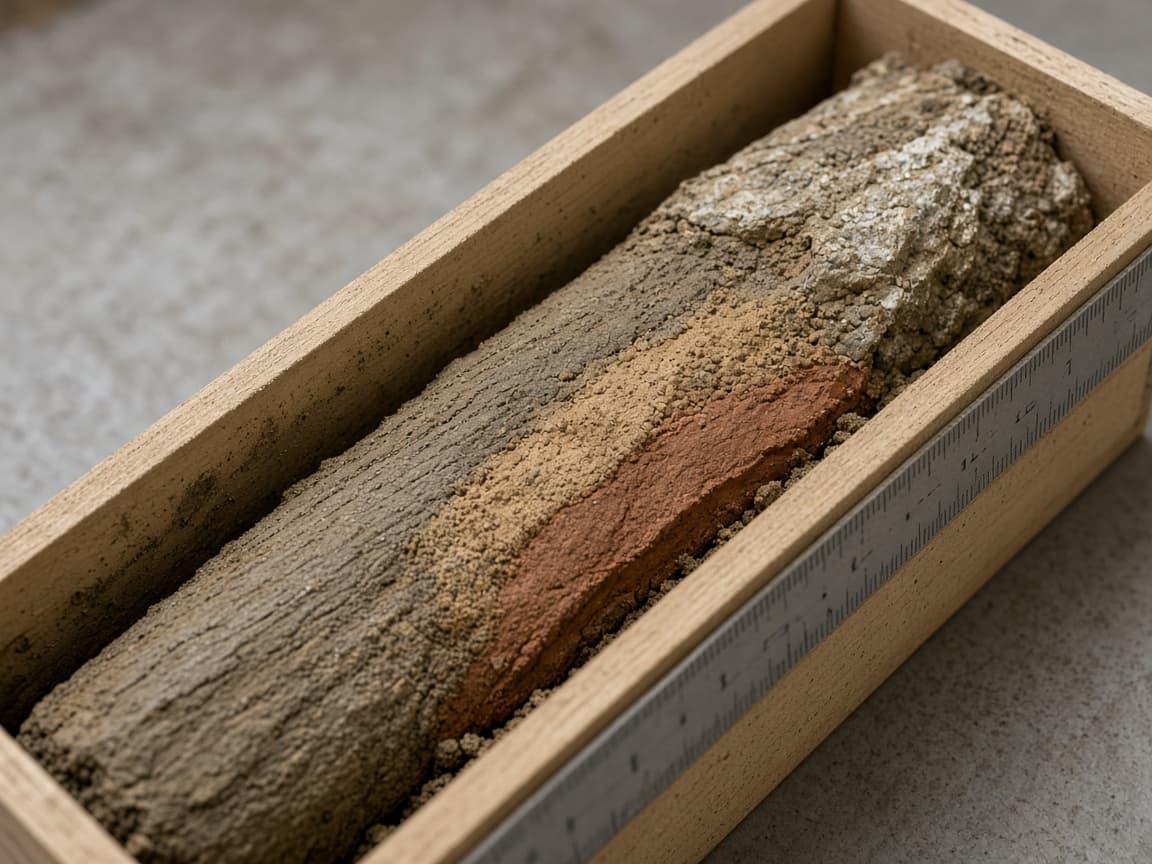
The framework before the flow arrows
A migration opinion that starts with contours and never shows the borings is skipping the control. Units have to be correlated from log to log, with the contacts, the refusals, and the gaps drawn. Where a sand seam pinches out, a clay is continuous, or fill replaces native soil, the pathway either exists or it is a guess.
That is the work on our forensic geology page: cross-sections and framework memos a reviewer can argue with because the control points are on the drawing.
Fill, contacts, and preferential pathways
Preferential flow is a hypothesis with a geologic home: a coarse seam, a fracture set, a utility corridor, a paleochannel, or—in coal measures—a mine void or a subsided interval. Naming the class of feature is not the same as mapping it. The opinion should say what evidence puts that feature between the release and the receptor.
Historic fill is a regular trap. Samples and wells completed in fill answer a different question than wells completed in the native water-bearing zone. Mixing those populations on one map is how two stories become one plume.
Sparse data and false precision
Most sites do not have enough borings to draw a unique cross-section. The defensible product shows more than one correlation where the logs allow it, and it says what additional control would rule a pathway in or out. Smooth lines through empty space read as confidence the record did not earn.
Geophysics and cone penetration tests can tighten correlation between borings when they are tied back to logs, not used as a picture that replaces them. Aerial context helps with disturbance and topography when it is collected under the rules that apply to the site, including FAA Part 107 where we fly.
Questions counsel ask
- What is forensic geology?
- It applies geologic methods to disputed facts—typically stratigraphic correlation, fill versus native soil, and whether a physical pathway is supported. In environmental matters it is the framework for hydrogeology and chemistry opinions.
- How is forensic geology different from hydrogeology?
- Forensic geology is the rock and soil framework. Hydrogeology is groundwater movement through that framework. Contaminant migration opinions need both.
- Are boring logs enough?
- They are the control. They are often not enough for a unique correlation. A defensible section shows the logs, the uncertainty, and what data would change the pathway opinion.
Daniel S. Fisher, P.G.
Owner and principal hydrogeologist, Wetstone Solutions LLC. Pennsylvania professional geologist since 1994. This note is for education. It is not legal advice and not an opinion on any matter.
Related reading
- Forensic geology
- Hydrogeology consulting
- Environmental litigation support
- Hydrogeochemistry for source questions