
Insights ·
What counsel should look for in a hydrogeology expert witness
A hydrogeology expert witness is there to explain groundwater flow, pathways, monitoring, and models in a way a judge or jury can follow—and a reviewer can test. The useful qualifications are licensure for the work, experience on the kind of site in dispute, and a writing habit that shows the data, the assumption, and the limit of the opinion.
Match the license to the opinion
If the opinion is the practice of geology or hydrogeology, ask where the expert is licensed and whether that license covers the engagement. Wetstone Solutions holds professional geologist licensure in Pennsylvania, Indiana, Missouri, Nebraska, and Washington. The home office is in Freedom, Beaver County, which is why Pittsburgh and Western Pennsylvania matters are a natural fit, but licensure is not a substitute for scope, conflicts, and the rules of the forum.
A long list of states is less informative than a clear answer to a narrower question: who will sign the opinion, and have they done this kind of interpretation before? Pathway timing, well interference, remedy capture, and a challenge to someone else’s model are different assignments. Hydrogeology expert witness work should be scoped to the question, not to a generic “environmental” label.
Site-type experience beats a generic résumé
Counsel usually need someone who has already lived with the kind of record the case will turn on: layered fill, fractured bedrock, a long monitoring history, a mine-influenced setting, a landfill, or a plume that more than one party may own. Ask what the expert did on those sites—conceptual model, aquifer testing, model review, geochemistry—not just that the site existed.
Forty years of practice is only useful if it shows up as judgment about data gaps. The better conversations start with what the boring logs and hydrographs can support, and what they cannot. That is also the difference between environmental litigation support and a literature summary.
Read how the limitations are written
Request a redacted report outline or a published methods note before you hire on credentials alone. Look for calibration targets named as targets, parameters tied to measurements or to a stated literature range, and sentences that bound the opinion. A report that reads as a single uninterrupted conclusion is hard to defend once the cross-examination reaches the first assumption.
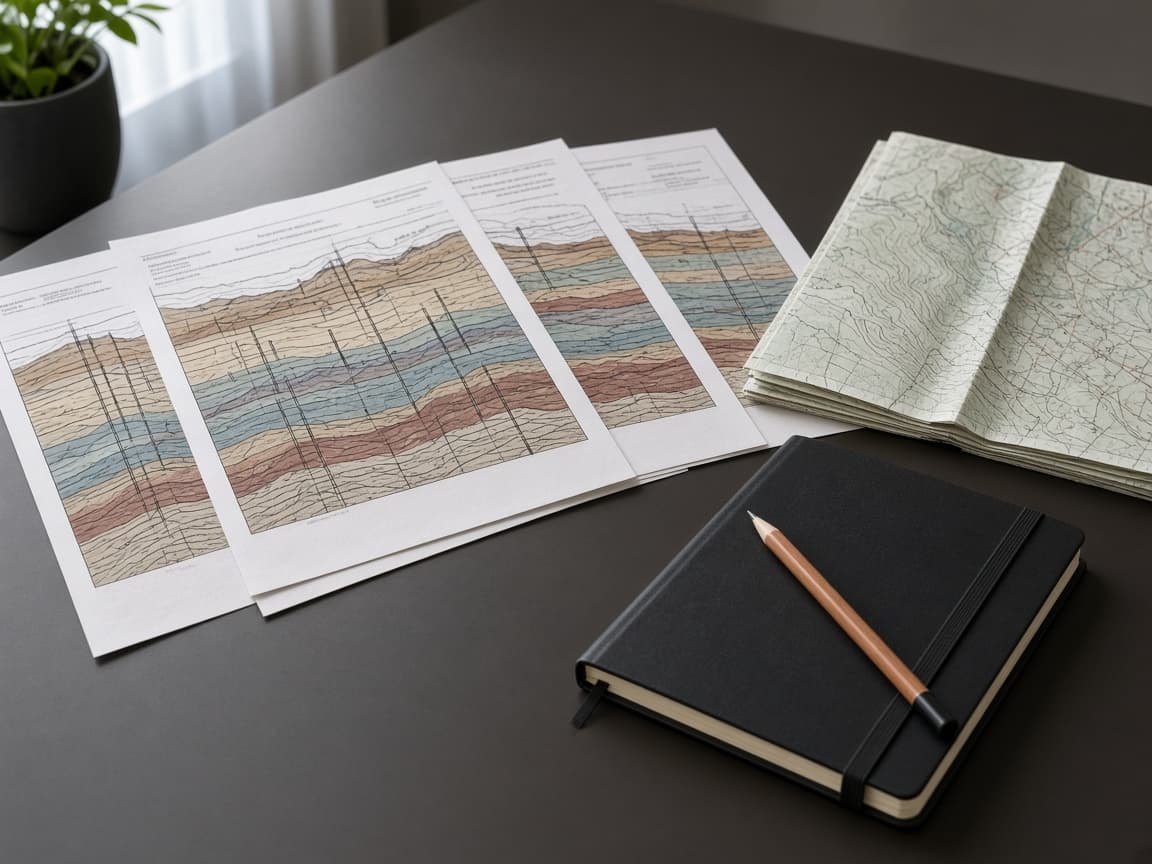
Graphics matter as much as prose. A potentiometric map, a cross-section with the control points shown, and one chemistry figure tied to a stated inference will carry a hearing further than a gallery of color plots. If the expert cannot say what a figure is allowed to prove, the figure is not ready.
Model review is its own assignment
Many engagements are not “build a new model.” They are “tell us whether this model is doing what the report claims.” That review looks at the conceptual site model, boundary conditions, whether calibration wells were also treated as known truth, and whether sensitivity runs touch the assumption that actually moves the answer. The companion note on groundwater model admissibility is the checklist we use for that conversation.
Original opinions and rebuttals can sit in the same matter. They should still be separated in the file: what we conclude from the site data, and what we conclude about the other expert’s method. Mixing those two voices is how a solid technical point gets treated as advocacy.
Start with a conflict check and a bounded scope
Send the site, the parties at a high level, the question, and the deadline. We confirm conflicts before technical work starts. Early scope—report, rebuttal, model review, deposition, trial—avoids paying for a treatise when the hearing needs a narrow opinion.
Remote analysis is often enough for the first review of an existing record. A site visit earns its cost when the geology, well construction, or the physical layout is itself in dispute. Credentials and a short list of public appearances are on the media and credentials page.
Questions counsel ask
- What qualifications matter for a hydrogeology expert witness?
- Relevant education, professional geologist licensure where the opinion is the practice of geology, and a record of the specific work the matter needs—flow interpretation, model review, geochemistry, or forensic geology. Communication under scrutiny matters as much as the technical résumé.
- Do you work for plaintiffs and defendants?
- We evaluate technical merits independent of which side calls. Engagements are accepted based on fit, conflicts, and scope.
- How should counsel start?
- Send a short overview for a conflict check: location, parties at a high level, the technical question, and the timeline. Scope the deliverable before records are dumped into a shared folder.
Daniel S. Fisher, P.G.
Owner and principal hydrogeologist, Wetstone Solutions LLC. Pennsylvania professional geologist since 1994. This note is for education. It is not legal advice and not an opinion on any matter.
Related reading
- Hydrogeology expert witness
- Environmental litigation support
- Pennsylvania hydrogeology expert witness
- Groundwater model admissibility